Is it still worth attempting to reproduce a Turin Shroud-like artefact with modern materials and techniques? Could thermo-stencilling be a valid approach?

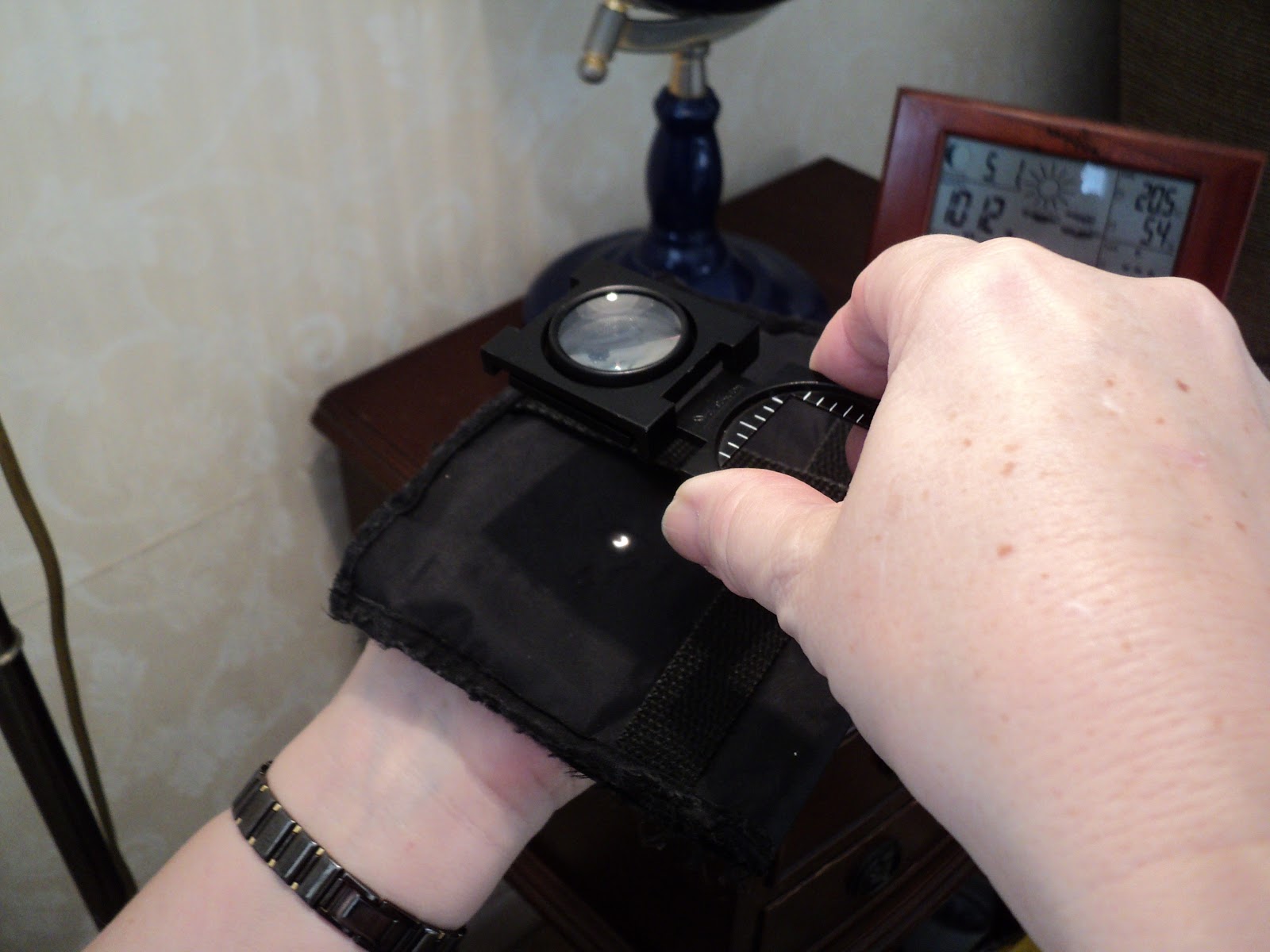
Scorching the charcoal image onto fabric using ceiling spotlight

Appearance after washing out the charcoal - drying in progress
We have been told repeatedly that the image on the Turin Shroud has features that have never been satisfactorily reproduced. Increasingly the message has become one of: “Don’t even think about it. That image could only have been made by supernatural means”
Whilst not verbatim, words to that effect have come recently from a group of Italian scientists no less (YES SCIENTISTS would you believe it?) who are talking about a miraculous corona discharge, producing ultraviolet or maybe some other high energy radiation. That shows the extent to which magic is now permeating into science. (We shall overlook the tiny fact that forming an image requires not just a source of light, regardless of which part of the electromagnetic spectrum – infrared, visible, uv etc. but in addition a means of focusing that light – see my previous post).
Am I the only one to be deeply disturbed by the blurring of the boundary between science and magic? And whilst the Vatican, to its credit, has never claimed that the Shroud is the burial cloth of Christ, or indeed of anyone from that era (its first response being to dismiss it as a fraud) is it not time for the Vatican to stop treating it as if it WERE a holy relic, and allow scientists access to more of the fabric. Is it not absurd that the C dating should be rubbished on the grounds that the sample was from a corner of the cloth that had allegedly become contaminated by frequent handling or, with even more brass neck, that it was not the original fabric, but a repair job that had used “invisible re-weaving”. It is quite simply ludicrous that scientific time and resources should be wasted in this manner.
This series of posts began with a prediction – that an image could be scorched onto linen (or other cellulosic fabrics, e.g. cotton) by drawing or painting with a black pigment, exposing the image to radiant heat, and then washing out the pigment, leaving just the scorch mark, and no clue as to its origin. That prediction was quickly confirmed using lump charcoal as the pigment initially applied dry, i.e. drawing, and then more effectively by applying as a pasty slurry in water, i.e. as charcoal paint.
So straightaway some pretty elementary science (black things absorbs heat) could be used to undermine one of the key claims made re the Shroud, namely that it was not “painted” on the cloth, that there are no brush marks, there are no residual traces of pigment. Using the ‘thermo-stencilling’ procedure I have described, one can indeed paint with a substance that can then be removed, leaving nothing except scorched cellulose with NO CLUE AS TO ITS ORIGIN.
That is just a beginning. There are further claims regarding the shroud (based it has to be stressed on that tiny, possibly unrepresentative sample of material). The crucial one is that the image is not a scorch mark, at least not a typical one (whatever that is – my own reading suggests that scorching of fabric has not been a major preoccupation of carbohydrate research). We are told that the coloration does not extend the entire width of the cloth, i.e. the total diameter of cellulose fibres- that it is confined to each of the external surfaces, with no coloration in between. We are told that the coloured material can be stripped off the surface with adhesive tape. We are even shown phase-contrast microscopy of a supposed coating on the surface of the fabric, with suggestions that it represents something acquired or added in weaving, possibly starch and simple sugars used as a processing aid for weaving, and that the image is confined to that layer.
Once you envisage the image being on an applied or accidentally acquired coating, rather than the cloth itself, then the number of formative mechanisms increases exponentially, and it becomes increasingly less worthwhile as a scientific exercise to explain images, if one does not know the starting materials. Indeed, some might say, especially in view of the C-dating, that the onus now rest entirely on the magicians to explain how the image was formed if wishing to prove a supernatural origin, as distinct from placing the onus on scientists to disprove a supernatural origin. Scientists do not like being asked to prove negatives, i.e. that there is no known non-supernatural means of reproducing the image, that exoplanets are not made of green cheese.
However, there is still some science that can be done, based on some rudimentary info we have re the nature of early linen, whether it be medieval in origin, or even 1st century AD. It is said that it was treated with starch, accompanied perhaps by simple sugars, which are, needless to say, close chemical relatives of cellulose.
Experiments are underway, which I shall report in real time, i.e. as a (web)log, which was the original meaning and intention of the “blog”, with new items being added to the top, rather bottom. It’s a little self-indulgent, I grant you, since it supposes that visitors come back for a second or third look. Neither is the end product terribly user-friendly to someone reading a reverse chronology, so to speak. But it’s a suitable format for a reporting a lot of bitty experiments in real time – as evidence that one is still busy and interested – and more user-friendly summaries of chief findings and conclusions can come later. I’ll call it : Weblog: further experiments to reproduce, albeit approximately, the Turin Shroud by non-supernatural means, e.g. by thermo-stencilling.