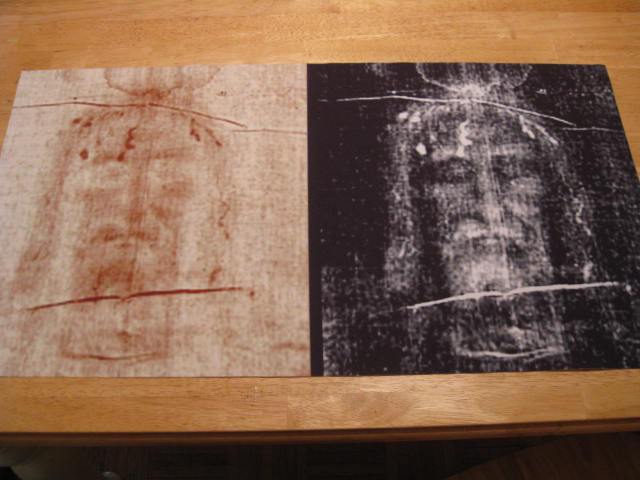
Yes, as the title makes clear, my describing Paolo Di Lazzaro and his ENEA team as “Mickey Mouse scientists” was not a
personal attack, It was actually generic and impersonal, a swipe at perceived
lack of professionalism, but with no attempt to demean character.
Professionalism, or lack thereof, is not about character (unless one adds that
charge, which I did not). It’s about competence and/or incompetence. It’s about delusions of adequacy. It’s about
engineers who think they can dabble in science in order to promote an agenda (which in this instance was
religious, but would have attracted my attention whatever the underlying agenda
– real or perceived).
At all kinds of levels, which I shall now proceed to
enumerate, the 2011 laser escapade by those ENEA state employees, apparently working after hours with company-provided equipment, was wrong,
wrong, wrong. What’s more I said so almost immediately, stating first what
COULD have been done (in my very first Shroud posting – on this very site under
the title of
‘thermostencilling by radiation’ ) before moving on to what SHOULD not have been done. Sure, it looks
like cocksure confidence and even arrogance. But nobody condemns the sportsman who can summon up specialist skills when needed. So why deny seasoned scientists like
myself, albeit long retired, the opportunity once in a while to display the armoury at our disposal, one that may have taken a lifetime to assemble and polish?
This unwillingness to mince words on a subject close to my
heart (and head), namely the use and abuse of science has in turn attracted
unwelcome attention in the Shroudie world. The name calling began early in
2012, and has continued ever since, with Troll Central deserving my designation
in allowing one “psuedonym” (sic) to emerge from the woodwork with a
carefully-crafted attack. Yes, it was clearly a troll attack, possibly,
probably by someone who is active in the Shroud world, more likely as a
promoter and polemicist than as a genuine investigator. But you know what they
say. Don’t feed the trolls.
This blogger has a different way of dealing with trolls.
It’s called unimpeachable honesty and transparency. You see, they are the
characteristics those anonymous trolls lack in choosing to snipe from cover in
so furtive and underhand a fashion. I shall now detail blow-by-blow the thinking
that led me to apply that “Mickey Mouse science” tag to the ENEA team and its
chief spokesman, Dr.Paolo Di Lazzaro.
I shan’t disappear from sight (or site) to assemble it
completely. I’ve flagged up what I intend to do, and more importantly why I am
doing it now, more than two years after my first posting here. Trolls cannot be ignored. They try to elicit a response they hope will cause further (self-inflicted) damage to their target. This blogger, this retired science bod, will respond by stating chapter and verse what led him to level the charges of pseudo- and Mickey Mouse science. If that results in self-inflicted damage, then so be it.
My recollections will be assembled carefully and methodically in bite-size
portions, and added onto the end of this posting at intervals. Be warned: there
will be a surfeit of the first person pronoun.
But then, that’s the way this blog and this blogger operates.
It’s a (we)blog in the original sense of the
term – a kind of running diary posted to the internet, warts ‘n’all. While not
100% certain, I
suspect that it’s the
first time a research project
with a
clearly defined goal (to discover how the Shroud image was or could have been
created by a medieval artisan) has been reported in real time.
See the most recent postings on
my specialist Shroudie blog for a summary of progress to
date.
Back again (April 1st). See this item on the BBC's site: "Is this the best April Fool's Ever?"
(harvesting the spaghetti crop in the Swiss Tyrol)
I found myself checking the calendar in late December 2011 when reading all those headlines.
The Telegraph:
Italian Study claims Turin Shroud is Christ's Authentic Burial Robe
Sample:
The scientists set out to "identify the physical and chemical processes
capable of generating a colour similar to that of the image on the Shroud."
They concluded that the exact shade, texture and depth of the imprints on
the cloth could only be produced with the aid of ultraviolet lasers –
technology that was clearly not available in medieval times.
The scientists used extremely brief pulses of ultraviolet light to replicate
the kind of marks found on the burial cloth.
They concluded that the iconic image of the bearded man must therefore have
been created by "some form of electromagnetic energy (such as a flash
of light at short wavelength)." Although they stopped short of offering
a non-scientific explanation for the phenomenon, their findings will be
embraced by those who believe that the marks on the shroud were miraculously
created at the moment of Christ's Resurrection.
"We are not at the conclusion, we are composing pieces of a fascinating
and complex scientific puzzle," the team wrote in their report.
Prof Paolo Di Lazzaro, the head of the team, said: "When one talks about
a flash of light being able to colour a piece of linen in the same way as
the shroud, discussion inevitably touches on things like miracles and
resurrection." "But as scientists, we were concerned only with
verifiable scientific processes. We hope our results can open up a
philosophical and theological debate but we will leave the conclusions to
the experts, and ultimately to the conscience of individuals."
The Independent
Scientists say Turin Shroud is Supernatural
Sample:
Italian government scientists have claimed to have discovered
evidence that a supernatural event formed the image on the Turin Shroud,
believed by many to be the burial cloth of Jesus Christ.
After years of work trying to replicate the colouring on the shroud, a similar image has been created by the scientists.
However,
they only managed the effect by scorching equivalent linen material
with high-intensity ultra violet lasers, undermining the arguments of
other research, they say, which claims the Turin Shroud is a medieval
hoax.
Such technology, say researchers from the National Agency
for New Technologies, Energy and Sustainable Economic Development
(Enea), was far beyond the capability of medieval forgers, whom most
experts have credited with making the famous relic.
"The results
show that a short and intense burst of UV directional radiation can
colour a linen cloth so as to reproduce many of the peculiar
characteristics of the body image on the Shroud of Turin," they said.
And
in case there was any doubt about the preternatural degree of energy
needed to make such distinct marks, the Enea report spells it out: "This
degree of power cannot be reproduced by any normal UV source built to
date."
A statement by lead researcher, Dr Paolo Di Lazzaro, said:
"If our results prompt a philosophical or theological debate, these
conclusions we'll leave to the experts; to each person's own
conscience," he said.
Yes, when this retired scientist read those reports, his first thought was "This has to be some kind of joke, some kind of wind-up. A 20th/21st century uv laser, a modern day "miracle" by any reckoning, a miracle of quantum physics and highly sophisticated precision engineering, commandeered in orderto model an alleged 1st century supernatural event that left a long-lasting imprint on linen?
So let's model Noah's Flood shall we, by blowing up the hydroelectric turbine hall in the Aswan Dam...?
If this isn't a mis-scheduled April Day's joke, then it has to be Mickey Mouse science."
More to follow:
Let's not mince words. The crassness of deploying a uv excimer laser to model a supposed supernatural event has to be offscale where maintenenance of one's scientific credibility is concerned. Just the idea of scanning the electromagnetic spectrum for promising radiations sources that might discolour linen is bad enough. OK, so the ultraviolet region is capable in theory of yellowing paper and linen. How? It's not something mentioned in the ENEA press releases, but sunlight and other sources of uv can be absorbed by lignin to produce yellow-coloured phenolics. It might be possible to construct an image-formation mechanism around that. Except for one thing: human bodies or cadavers do not radiate uv. Nor do they emit any kind of coherent (laser) radiation in which all the waves are 'in step' regardless of frequency and wavelength.The entire idea of a burst of radiation of any sort having produced the image on the Shroud is a non-starter in scientific terms. It matters not that laboratory-generated radiation might conceivably do the trick, especially if emitted by a pulsed high-energy laser. It is totally irrelevant, given that people do not emit radiation, except low energy infrared (heat). To propose a 1st century supernatural event that one calls "resurrection" and an accompanying image imprinting is perfectly in order if one is speculating within the religious sphere. To attempt to dress that up in scientific terminology, and to do so using a state-of-the-art man-made device like a uv excimer laser is not just pseudoscience. It is Mickey Mouse science.
Let's look briefly at the marriage of science and technology that led to the laser - arguably one of the greatest high tech achievements of the latter half of the 20th century, inasmuch as light-producing processes in excited atoms were coaxed into doing something on Planet Earth which probably happens nowhere else in the Universe, at least spontaneously (alien civilizations are another matter, if at a comparable level of technological prowess as ourselves).
Let's begin with standard, intuitive easy-to-explain physics - the fluorescence phenomenon. Shine ultraviolet ("black") light at certain substances and they fluoresce, i.e. glow. Why do detergents claim to make clothes whiter than white? Answer: they contain 'optical brighteners', i.e. chemical compounds that absorb the uv radiation of daylight, and re-emit in the blue end of the visible spectrum. The extra blue light emitted tends to mask the yellow colour that comes with ageing, thus making the fabric look whiter.
At an atomic level, the phenomenon is easy to explain. A quantum (smallest packet) of high frequency uv light is absorbed by the brightening additive, which has the effect of converting it to its excited state in which an electron is promoted to a higher energy level, further from the nucleus. When the electron drops back to its original energy level, a quantum of light is re-emitted, always at a lower energy level, i.e lower frequency, longer wavelength. If the light is emitted is in the visible region, we say the compound is fluorescent. The accounting is simple: one photon of uv light in, one photon of visible light out. No special geometry is required, or inputs other than fluorescent chemical and uv radiation. The phenomenon can be observed in everyday life, requiring no special instrumentation. Not so with laser light.
The trick that generates a laser beam - one in which the wave trains are all in synch, giving a narrow concentrated beam - is to excite atoms, causing promotion of electrons, and then to irradiate with an external source of appropriately tuned radiation at the same time. Something remarkable happens which I don't pretend to understand. Instead of a single photon being ejected as the electron drops back to its ground state, two are produced. Thus the description "stimulated" in the acronym of LA
SER.(Light Amplification by Stimulated Emission of Radiation). That's the science, the non-intuitive quantum physics, for which we have Einstein to thank initially. But some fancy engineering is needed as well, to contain the extra photons during the stimulation process long enough to generate an energetic pulse of coherent light. That requires a pair of mirrors, between which the photons reflect repeatedly as their numbers build. Then, when the energy reaches a critical level, one of the mirrors then displays a hidden property - it is semi-transparent, allowing the full strength laser beam to escape as a pulse of intense light. Given the number of things that have to be just right to create the laser effect, it's hardly surprising that laser beams are not found in nature - they are entirely a man-made creation (nature merely supplying the raw materials). So is it not disingenuous, to say the least, for the ENEA team to allow the term "supernatural" to appear in headlines, having deployed not just ultraviolet light, as comes from the sun, not cadavers, but a coherent beam of laser light no less, one that comes only from a man-made laser? It's bad enough that laser light was used as a model to produce a radiation scorch on linen (about which more later). To claim that the interaction might account, even in broad principle only, for an allegedly 'supernatural' event might seem to some to display a cavalier disregard for language at the very least, and more besides. Give unto Caesar what is Caesar's. Give unto science and technology what is science and technology's. Laser beams are not part of God's creation, anymore than rockets, atom bombs, hydroelectric power stations etc etc.
So, the specific energy source chosen to model; the Shroud image - coherent light from a man-made uv excimer laser - was contraindicated on grounds of appropriateness to the task. But one may go further and ask why any source of radiant energy was chosen. What is so special, so unique, about the Shroud image as to restrict consideration to radiation alone, given it is just one of the Big Three under the heading 'heat transfer' (the others being conduction and convection)?
Let's take a closer look at what those ENEA people said in their
published paper, dated June 15 2010, as distinct from media reporting at the time or subsequently.
Abstract.
2010 Society for Imaging Science and Technology.
͓
DOI: 10.2352/J.ImagingSci.Technol.2010.54.4.040302
The faint yellowed body image embedded into the linen cloth of the Turin Shroud has peculiar chemical and physical characteristics that at the moment cannot be replicated all together in laboratory. The authors present experimental results of ArF excimer laser irradiation (wavelength 193 nm) of a raw linen fabric, seeking for coloration similar to that of the Shroud image. The authors achieved a permanent yellow coloration of linen as a threshold effectt of the laser beam intensity and number of shots. Most important, the authors have achieved for the first time a submicrometer depth of coloration of the outermost part of the fibers, leaving a colorless fiber medulla. The authors also obtained latent coloration that appears after artificial aging of linen following laser irradiations that at first did not generate any visible effect. The authors have recognized different physical and chemical processes involved in both coloration and latent coloration. The comparison of the Turin Shroud image with the results of our ArF laser irradiation shows an interesting overlap of the main physical and chemical features.
That abstract does not start at the beginning . There is no mention there of STURPm which I consider to have been seriously misquoted in a self-serving kind of way. To see how one has to move on to the Introduction (we'll return to the Abstract later).
͔
INTRODUCTION (my bolded passages)
The Turin Shroud is a single piece of linen cloth measuring about 4.4 m by 1.1 m. Faint frontal and dorsal images of an apparently crucified man are embedded into the Shroud. These yellowish body images have peculiar chemical and physical characteristics that have stimulated a worldwide scientific debate.
Most of the scientific data on the Shroud image are from the work carried out by a team of 26 scientists under the auspices of the Shroud of Turin Research Project, Inc., (STURP) (1978), that performed an in-depth examination on the Shroud with electromagnetic energy, from infrared to x-rays, obtaining data leading to the analysis of the substances making up the body image and bloodstains.
The STURP measurements show that the body image is not painted, printed, singed by a heated bas-relief, or rubbed on a sculpture; moreover, the image color resides on the top-most fibers in the cloth weave. Reference1 listed more than forty chemical and physical features of the Shroud image, and up to date
all attempts to reproduce an image with the same microscopic and macroscopic aspect as well as all the chemical and physical characteristics have been unsuccessful. In this respect, the origin of the body image is still unknown
"Not singed by a heated bas relief"? Did STURP say that, as distinct from one or other of its members in personal memoirs etc? It certainly never said any such thing in its Summary, which I reproduce here in full.
A Summary of STURP's Conclusions
Editor's Note: After years of
exhaustive study and evaluation of the data, STURP issued its Final
Report in 1981. The following official summary of their conclusions was
distributed at the press conference held after their final meeting in
October 1981:
No pigments, paints, dyes or stains have
been found on the fibrils. X-ray, fluorescence and microchemistry on
the fibrils preclude the possibility of paint being used as a method for
creating the image. Ultra Violet and infrared evaluation confirm these
studies. Computer image enhancement and analysis by a device known as a
VP-8 image analyzer show that the image has unique, three-dimensional
information encoded in it. Microchemical evaluation has indicated no
evidence of any spices, oils, or any biochemicals known to be produced
by the body in life or in death. It is clear that there has been a
direct contact of the Shroud with a body, which explains certain
features such as scourge marks, as well as the blood. However, while
this type of contact might explain some of the features of the torso, it
is totally incapable of explaining the image of the face with the high
resolution that has been amply demonstrated by photography.
The basic problem from a scientific point of view is
that some explanations which might be tenable from a chemical point of
view, are precluded by physics. Contrariwise, certain physical
explanations which may be attractive are completely precluded by the
chemistry. For an adequate explanation for the image of the Shroud, one
must have an explanation which is scientifically sound, from a
physical, chemical, biological and medical viewpoint. At the present,
this type of solution does not appear to be obtainable by the best
efforts of the members of the Shroud Team. Furthermore, experiments in
physics and chemistry with old linen have failed to reproduce adequately
the phenomenon presented by the Shroud of Turin. The scientific
concensus is that the image was produced by something which resulted in
oxidation, dehydration and conjugation of the polysaccharide structure
of the microfibrils of the linen itself. Such changes can be duplicated
in the laboratory by certain chemical and physical processes. A
similar type of change in linen can be obtained by sulfuric acid or
heat. However, there are no chemical or physical methods known which
can account for the totality of the image, nor can any combination of
physical, chemical, biological or medical circumstances explain the
image adequately.
Thus, the answer to the question of how
the image was produced or what produced the image remains, now, as it
has in the past, a mystery.
We can conclude for now that the Shroud
image is that of a real human form of a scourged, crucified man. It is
not the product of an artist. The blood stains are composed of
hemoglobin and also give a positive test for serum albumin. The image
is an ongoing mystery and until further chemical studies are made,
perhaps by this group of scientists, or perhaps by some scientists in
the future, the problem remains unsolved.
___________________________________________________________________________
If all one had was that STURP summary, one could be forgiven for thinking that the Shroud image was some kind of scorch, inasmuch as the characteristics listed ("oxidation, dehydration, conjugation of polysaccharides") are those associated with exposure to high temperatures, sufficient to cause thermal degradation and associated chemical reactions, often described as "pyrolysis reactions". No, the STURP summary never employed the term "scorch" as such (which is somewhat ambiguous if not further qualified). But then neither did it say that the Shroud image was definitely not a scorch either, contrary to what one might have assumed from the Introduction to the 2010 ENEA paper. One does not lightly misquote a landmark paper when introducing and justifying one's particular approach to a research topic, yet that is precisely what those ENEA people did in 2010. What's more they went on to embellish their "definitely not a singe" pitch in that same Introduction.
Do I feel the ghost of Raymond N.Rogers RIP hovering nearby as a write? Yo bet I do, since as soon as the term "scorch2 is invoked, he and his thinking are invariably summoned up in short order, so as to instantly crush any heretical thoughts as to the Shroud image being a mere contact scorch. It happened to this blogger a mere 6 weeks or so after engaging in Shroud studies and deploying the S word.
http://shroudstory.com/2012/02/10/the-image-on-the-shroud-of-turin-is-not-a-scorch/
Note the categorical title: "The image on the Shroud is not a scorch".
It was Daniel R.Porter on his 'shredstorydotcom' site blowing the whistle on this upstart, later to be joined by innumerable character-defaming trolls. In an ideal world, I would have been able to focus purely on the ENEA team, but given the status accorded to the Rogers canon, a diversion to look at his oft-quoted arguments against "scorching" (read contact-scorching) is now essential.
Porter: The best we can do is use Rogers’ own words, and we might imagine him first saying, “Colin you are wrong because . . .”:
Cellulose molecules are folded back and forth in a fairly
regular arrangement, and they show the properties of crystallinity.
This is called a "fibrillar structure." When you rotate the stage of a
petrographic microscope with crossed polarizers while looking at a linen
fiber, straight lengths change from black through colored to black
again every 90%. The fiber is birefringent and has an ordered structure.
When cellulose fibers are heated enough to color them, whether by
conduction, convection, or radiation of any kind, water is eliminated
from the structure (the cellulose is "dehydrated"). When water is
eliminated, C-OH chemical bonds are broken. The C- free radicals formed
are extremely reactive, and they will combine with any material in their
vicinity. In cellulose, other parts of the cellulose chains may be the
closest reactants. The chains crosslink.Crosslinking changes the crystal structure of the cellulose, and you can see the effect with a polarizing microscope.
When cellulose starts to scorch (dehydrate and crosslink), its
characteristic crystal structure becomes progressively more chaotic. Its
birefringence changes, and not all parts of a straight fiber go through
clear transitions from dark to light at the same angle. Zones of order
get smaller and smaller. It finally takes on the appearance of a
pseudomorph and just scatters light. A significantly scorched fiber does
not change color as the stage is rotated between crossed polarizers.
. . .
The crystal structure of the flax fibers of the Shroud shows the
effects of aging, but it has never been heated enough to change the
structure. It has never suffered chemically significant irradiation with
either protons or neutrons. No type of radiation that could produce
either color in the linen fibers or change the 14C content (radiocarbon age) could go unnoticed. All radiation has some kind of an effect on organic materials.
This proves that the image color could not have been produced by
thermal or radiation induced dehydration of the cellulose. Image
formation proceeded at normal temperatures in the absence of energetic
radiation of any kind.
Porter: I think Rogers would have pointed out, as I and others have already
attempted in one form or another, that there are many characteristics of
the image that cannot be ignored. Since Colin is interested in what
Rogers might think, I will confine myself to some image characteristics
that Rogers specifically mentioned, I will use Rogers’ own words.
-
Direct microscopy showed that the image color resides only on the topmost fibers at the highest parts of the weave.
(edit: it goes on to discuss banding irregularities and some (I think) arguable interpreations, but let's stop here and look at the gist of Rogers' arguments thus far. To say I am/was hugely unimpressed would be a gross understatement, with no disrepsect to someone no longer around to defend himself (such is science).
(In fact, I've just remembered that I had Rogers "thrown at me" just 3 days after my very posting.
http://shroudstory.com/2012/01/02/thermo-stenciling-the-shroud-of-turin/
I must say I was hugely unimpressed with Rogers' case there, citing as it did the Arrhenius rate equation (and having it deployed as 'ammunition' by Daniel R Porter, a non-scientist) What does the Arrhenius equation, which I used to teach to would-beUniversity entrants, have to do specifically with scorching, given it's a general equation that underpins the whole of chemical kinetics?).
So what was fundamentally and some migth say spectacularly wrong with Rogers' argument against scorching? Answer: he displayed there and elsewhere a touchingly simplistic assumption that a linen fibre can be regarded essentially as pure cellulose, and that no other polysaccharide components are worthy of mention.
While cellulose is the chief constituent, it is also a remarkably stable entity, physically, chemically and botanically. That's why chemists use it as a filter medium, able to withstand any number of harsh reagents(not all).
But there are other polysaccharide component of plant cell walls that are chemically very different, even if their names are similar, notably the hemicelluloses. These are not made entirely of glucose units, as is the case with cellulose, but have an abundance of chemically reactive 5-carbon (pentosan) sugars too.However, the chief point of relevance is that the hemicelluloses as heteropolymers, with a diverse range of monosaccharide monomer units that create an open matrix or matrix - a far cry from the highly crystalline fibres of cellulose - a homopolymer (identical repeating units).
What's more the pyrolysis temperature of hemicelluloses are much, much lower than that of cellulose.
See this paper by H.Yang et al.
Characteristics of hemicellulose, cellulose and lignin pyrolysis
http://www.sciencedirect.com/science/article/pii/S001623610600490X
Quote from abstract (my bolding):
In thermal analysis, the pyrolysis of hemicellulose and cellulose
occurred quickly, with
the weight loss of hemicellulose mainly happened
at 220–315 °C and that of cellulose at 315–400 °C. However, lignin was
more difficult to decompose, as its weight loss happened in a wide
temperature range (from 160 to 900 °C) and the generated solid residue
was very high (∼40 wt.%). From the viewpoint of energy consumption in
the course of pyrolysis,
cellulose behaved differently from
hemicellulose and lignin;
Yes, sad to say, Rogers, a chemist, with no botanical training that I'm aware of, displayed a total blind spot for the hemicelluloses of plant cell walls. In fact, the only reference I can recall him making was to hemicelluoses as "surface impurities". Well, he was partly right there, not about "impurities" (!) but about being on the surface, inasmuch as hemicelluloses are a major component of the primary cell wall. The latter is the most superficial part of any plant cell, and thus the first part to come into contact with a hot surface (or radiation for that matter).
In short, the reasons Rogers cited against the Shroud linen having been heated, based mainly on cellulose, were simply irrelevant He was looking in the wrong place. He should have been looking tat the hemicellulose-rich primary cell wall. There should have been a botanist on the STURP team.
More to the point, re ENSA, the STURP team collectively did not rule against a contact scorch, at least in its Summary, and while one its team leaders argued against a scorch, he based his case on irrelevant considerations. STURP said that no one method could account for the totality of the image. Why should it? The Shroud image has had centuries in which to acquire secondary characteristics due to ageing etc that would not be reproduced in a fresh scorch.
ENSA could not have been ignorant STURP's refusal to be dogmatic, given its references elsewhere to the primary cell wall. ENSA's case for rejecting the scorch hypothesis and resorting to high tech lasers was based on a false prospectus.
Now to the $64,000 dollar question. Are, or were (when first imprinted) the characteristics of the Shroud image really so subtle such that nothing so crude as a contact scorch could possibly have produced it, requiring recourse to exotic mechanisms featuring mysterious radiation, emanating from a particular 1st century victim of crucifixion?
Reminder of what was written in that Introduction:
"... moreover, the image color resides on the top-most fibers in the cloth weave."
Yes, precisely. And what is that, but a signature of a contact scorch? How can it be anything but?
Had it been a radiation scorch, the image would have been on deeper parts of the weave that were still in direct, unobstructed line of sight of the incident radiation'. The superficial nature of the Shroud image, residing on the highest points of the weave, SHOULD have been recognized as a contact scorch. Instead, that property has been bizarrely attributed to a radiation scorch. Why? On what grounds? Where is the experimental evidence that would support so improbable an assumption. Come to think of it, where is the experimental evidence that demonstrates what a contact scorch can or cannot do to linen? Whence cometh all this expertise about contact scorches that quickly rules them out from consideration? How many contact scorches had Paolo Di Lazzaro and his ENEA team done, prior to relating that risible "hot coin" experiment, specifically for this blogger's benefit, on 'shredstorydot come'?
Yes, risible. That surely must be the occasion when the scientific credibility of ENEA's chief spokesman hit rock bottom. Even the first commenter on that thread could see how threadbare (no pun intended) were the contrived and self-serving data presented.
Still to come: that Mickey Mouse experiment with the hot coin.
Here's the preamble, provided by Paolo Di Lazzaro no less. (Don't you just love those opening words: "from a physics point of view" as if chemical scorching was purely about physics).
Dear Dan and All:
I checked the idea of Colin Berry in the website you quoted. In
short, from a physics point of view, his model is untenable, especially
concerning the depth of coloration. Let me explain why.
Berry wrote: “
The scorching will initially be confined to those
parts of the fabric that are in immediate contact with the hot metal; no
air gap is permissible, since radiated heat will not scorch white
linen. What is more, the scorch will be confined to the outermost fibres
of the thread, because the scorch will tend remain trapped within the
first-encountered fibres, rather than being able to “jump across” to
adjacent fibres. Why is that? It is because the resistant cellulose
cores that are unaffected are able to conduct away heat rapidly,
bringing the temperature of the hot template down to below that which
will induce scorching Is it realistic to suppose that cellulose fibres
could conduct away heat without themselves becoming degraded? Yes. I
believe it is.”
It is quite easy showing the above assumption is wrong, and it is one
of the few cases where it is faster doing the experiment than to
explain the theory. According with a paper quoted by Berry, the onset of
pyrolysis in hemicelluloses is at about 220°C. We have heated a
5-cents euro coin at about 230 °C in contact with a linen cloth. Just 5
seconds after the coin reached the max temperature the whole cross
section of threads in contact with the coin was colored. After15
seconds all the thickness of the cloth was colored and the round shaped
image of the coin appeared on the opposite side. After checking in our
Lab, we repeated this easy and small-size experiments in the RAI3 TV
studios (GeoScienza) to demonstrate that heating linen cannot give a
superficial coloration. See
http://www.tvrit.it/enea/20120103-RAI_3-COSE_DELLALTRO_GEO_1555-175825001a.ASF starting from the minute 16:30.
After the experimental demonstration, let’s approach the basic
elementary physics that explain why the idea of Berry is untenable, and
heat cannot produce a superficial coloration.
.......................................................
That quoted passage of mine regarding heat conduction away from the immediate zone of pyrolysis by intact, heat-resistant cellulose fibres was taken from a posting of mine on 18th Feb 2012 (my most widely cited one to date, according to WordPress stats):
http://shroudofturinwithoutallthehype.wordpress.com/2012/02/18/the-shroud-of-turin-lets-focus-on-that-hemicellulose-coating-on-the-linen-fibres-it-could-explain-a-great-deal/
What Di Lazzaro in his theorizing failed to mention was the real-life evidence that cellulose can conduct heat sufficiently well to prevent overheating and scorching. I had mentioned the ability to boil water in a paper bag held over a flame.
But things move on. If I were asked today why I think a scorch can be highly superficial, and confined to the first few fibres of a thread. I would not give heat conduction - a physical explanation - as the initial response, despite the comforting support of that paper bag 'party trick'.
What would I now say?
I would first show what happens when one does serial stamping from a cooling template, to get a series of scorches of rapidly decreasing scorch intensities.
Each was done immediately after the other. Note the rapid loss of heat from the template (a horse bras). Why was that? The answer I (now) believe lies more in the realms of chemistry (or physical chemistry - thermochemistry) than pure physics alone. It's because the pyrolysis reactions in an open system, one in which water of dehydration is able to escape as steam, is endothermic, i.e. abstracting heat. Each time a new scorch was produced, more heat was quickly removed from the template, with barely sufficient remaining after the 4th imprinting to produce another (or at the limits of visibility).
So which is the appropriate model for the Shroud image - the initial intense scorch with a very hot template, or the final faint one with a cooler one?
I say the final one if a medieval artisan had set out to imprint an image on linen without destroying the integrity of the fabric through its entire thickness, in other words, wishing to leave a 'minimalist' superficial scorch only, and being prepared to conduct a few preliminary tests to ensure there would be no over-scorching. (In fact, as I reported late last year, there is a technique for scorching imprinting, one I call the
LOTTO method - Linen On Top, Then Overlay) - the overlay being a damp cloth - that virtually guarantees a faint, fuzzy topside image and NO reverse-side scorching).
Note carefully the way Di Lazzaro's alleged clincher of an experiment was performed:
"We have heated a
5-cents euro coin at about 230 °C in contact with a linen cloth. Just 5
seconds after the coin reached the max temperature the whole cross
section of threads in contact with the coin was colored. After15
seconds all the thickness of the cloth was colored and the round shaped
image of the coin appeared on the opposite side."
So you transmit heat into metal continuously it would seem (details not given) until you have reached the temperature at which hemicelluloses are known to pyrolyse. You maintain contact, and lo an behold, one begins to see reverse side scorching, which is proof that a superficial front-side scorch is not possible.
But that result was guaranteed, given the way the experiment was designed, using prolonged contact between template and cloth for as long as needed to see a reverse side image. That was not a scientific experiment. There was no systematic testing of variables (time, temperature, contact pressure etc), merely one fixed, some might say rigged choice to produce the desired answer. Let's not mince our words. It was a Mickey Mouse experiment, an own goal on the part of ENEA's team leader, providing indisputable proof of what I had been saying all the way along, namely that these people do not have the faintest clue about the scientific method. Laboratory instrumentation and other hardware is there merely to confirm their preconceptions, and hopefully to persuade others to adopt their particular 'philosophy and theology' regarding the Shroud of Turin.
In passing I would mention another phenomenon that can make one think one can "see" reverse side scorching that is not really there (e.g. if examined closely with a hand lens). If viewing the reverse side against a light background, one can get back-reflection of yellow-light from the contact-scorch on the opposite side through the interstices of the weave. Yes, a hand lens shows it's sometimes not the fibres and threads that are coloured on a 'reverse-side scorch but the reflective supporting surface behind the linen. It's important to view the fabric on a black matt surface before making any 'positive' sighting of reverse-side scorching. See my recent posting on the BROIL effect.
Let's see what follows the "experiment" shall we?
"After the experimental demonstration, let’s approach the basic
elementary physics that explain why the idea of Berry is untenable, and
heat cannot produce a superficial coloration."
Ah "basic elementary physics". You mean the kind I studied up to University entrance level maybe? That's London University A-Level Physics. Maybe also the physics that I used to teach as part of the physical chemistry modules in London University A Level Chemistry?
Here's the rest of the anti-scorch broadside in the Di Lazzaro missive to Daniel R,Porter. I'll be back later to deal with it point by point.
The hot metal transfers energy(heat) to the primary cell wall (pcw)
of the linen fibrils by contact. From a microscopic view, transferring
energy by contact means the hot (i.e. fastly moving)atoms of metal hit
hemicelluloses molecules transferring momentum, thus increasing both
amplitude and velocity of the motion of hemicellulose molecules around
the equilibrium position (centroid). As a consequence, hemicellulose
increases its temperature.
Response: As you say - elementary physics. But for whose benefit? Why start in this fashion, given your missive was directed at a named individual, one with a scientific background, and (probably) some two or three decades your senior? Maybe you didn't like that label "Mickey Mouse scientist". All you have done so far is confirm it.
In the regions of contact between pcw and cellulosic medulla, we
still have a transfer of heat by contact, like in the previous metal-pcw
case. The temperature of the medulla will increase. In the region
where there is no contact (e.g.,a small air gap between pcw and medulla)
we have heat transfer by irradiation. In fact, every material emits
radiation having a spectrum peaked at a wavelength which depends on its
temperature: the higher the temperature, the shorter the wavelength.
This is the well known phenomenon of the black body emission, governed
by Planck’s law, Wien’s law and so on (first year exam for students of
Physics, Mathematics, Chemistry, Engineer).
Response : Someone is treading on very dangerous ground here. Yes, we know that all matter above absolute zero (0 degrees Kelvin) exchanges radiation with other bodies, including those at a higher temperature. But that is infrared radiation at normal environmental temperatures. It does not become visible radiation (except for a miniscule, probably undetectable amount in the tail of the distribution). What is the relevance of infrared radiation where scorching of linen is concerned? Answer: scarcely any except under special conditions. Infrared radiation can only increase the vibration, stretching frequencies etc of chemical bonds. It does not have sufficient energy to break chemical bonds directly, unless from a customised high-intensity source. So who is starting to show an alarming ignorance of "elementary physics" (and/or chemistry)? To stand any chance of scorching with infrared radiation from a realistic source you would need to have a matt black or otherwise opaque pigment present (one aspect of "black body"radiation, black bodies being efficient absorbers as well as emitters of radiation). That substance could then continue absorbing radiation until its temperature became sufficiently high to cause thermal rupture of chemical bonds. But that;s not the same as beaming infrared at white or near-white linen and expecting to see it scorch without having that opaque sensitizer present. See my very first experiment, reported on this site, showing how charcoal could act as a sensitizer for scorching under an incandescent light source (a mix of infrared and visible light - what I called thermostencilling).
As an example, at 20 °C the walls of a room emit radiation with a
broad spectrum, peaked in the far infrared at about 10-micrometers
wavelength. In the case of hemicelluloses at 200 °C the pcw emits
infrared radiation peaked at 6,1 micrometers. In the case we are
considering, the 6-micrometer wavelength will interact with the
cellulose of the core of the linen fibril (medulla), exciting
vibrational levels of cellulose that decay in heat thus increasing the
temperature of the medulla.
In addition, a well known optics law tells us the penetration depth
of the interaction between radiation and medulla cannot be smaller than
the wavelength, that is, not smaller than 6 micrometers in this case.
This fact alone explain why infrared radiation cannot produce a
superficial coloration of fibers.
Response. Yes, in theory. Wrong, in practice (which is all that matters where realistic modelling of the Shroud image is concerned). Cellulose may well have infrared absorption bands of the frequency or wavelength stated, but that is of no relevance, given that white linen reflects most of the infrared and visible radiation that falls on it. There is simply insufficient heating from the tiny ir absorption to produce localised scorching.
The proof of this is apparent each time one imprints from a template with sunken relief.
Note how the sunken features of the template (a pencil sharpener) failed to imprint. That's despite the recessed metal being a mere millimetre or two below the main plane. Yes, there was infrared radiation streaming across that air gap, but insufficient could be absorbed by the chemical bonds of the linen to produced localised heating and scorching. That's why I experimented (successfully) with charcoal in my thermostencilling experiments. By adding an efficient thermo-opaque absorber of radiation, sufficient radiant energy (visible and infrared) was absorbed to produce localised heating and scorching.
By the way, it is not possible that “the resistant cellulose cores
that are unaffected are able to conduct away heat rapidly” (see above
Berry’s statement) because of elementary fluid dynamic equations (a
classical engineering problem), of a not convenient area/volume ratio of
cylinders (elementary geometry) and because Berry assumes a exothermic
pyrolysis of cellulose, that is,by definition, a runaway process,
extended in time.
Response: Who knows the mechanisms that come in to play when cellulose conducts heat? One cannot treat it as a simplistic "engineering problem". This physicist/engineer certainly knows how to insult the intelligence of those of us who have more extensive background in biochemical systems at the molecular level. Plant cell wall materials represent a complex physicochemical system that could feature any number of mechanisms operating at the molecular level, notably by "melting" and recrystallization aka thermally-induced disorder/re-order processes involving multiple hydrogen bonding interactions, a well known phenomenon in polysaccharide chemistry (there's a large literature on starch so-called retrogradation that can be studied by differential scanning calorimetry and other techniques).
No, I did not assume an exothermic pyrolysis of cellulose. I quoted Yang et al who said that cellulose pyrolysis was ENDOTHERMIC, It was hemicellulose pyrolysis they said was exothermic. But see my earlier comment. While the latter may be exothermic under standard conditions (15 degrees C) it may well be endothermic in an open system where H2O escapes as steam.
In summary, when heating a linen cloth by a hot metal in contact,
well known physics models foresee the pyrolysis of the whole fibers and
threads, and this is exactly what we observe in the experiments.
Response: Carbohydrate pyrolysis is chemistry, not physics. How can there be well known physics models for something that is chemistry? How can there be well known physics models for something (scorching of linen) that has not been systematically studied, where we are presented with a simplistic one-off imprinting with a hot coin that was totally misconceived, proving absolutely nothing.
Useless to say, it is all the approach of Colin Berry to find a
middle age technology able to create the Shroud image that is hopeless:
just consider the half tone effect. It could not have been made by
medieval forgers because they would need a modern microscope to observe
and then control their micrometric-scale coloration.
Response:
Aren't you making an unwarranted assumption - namely that the half-tone effect was produced in a single step at the instant of image imprinting? How can you be so certain? Who's to say that it is not the result of two steps: initial imprinting by contact scorching, followed by loss over time of the more heavily scorched fibres, leaving just minimally scorched ones? See my
recent posting on the two-step making/unmaking hypothesis to account for the half-tone effect.
Summary: Look again at that definition (more correctly description) of pseudoscience that I retrieved from ratiional wiki. Then look at ENEA's laser beam experiment, the accompanying 'rationale' (though I use the term loosely), the references to philosophy and theology. Then look at the anti-scorch diatribe that its team leader sent to Daniel R.Porter, and then at that simply dreadful single-point experiment with the hot coin , and the accompanying 'theory'.
What we see is an open-and-shut case of pseudoscience. My description of Paolo di Lazzaro and his ENEA team as Mickey Mouse scientists was fully justified.
More to follow.